








Table of contents
ShowThe Quick Answer
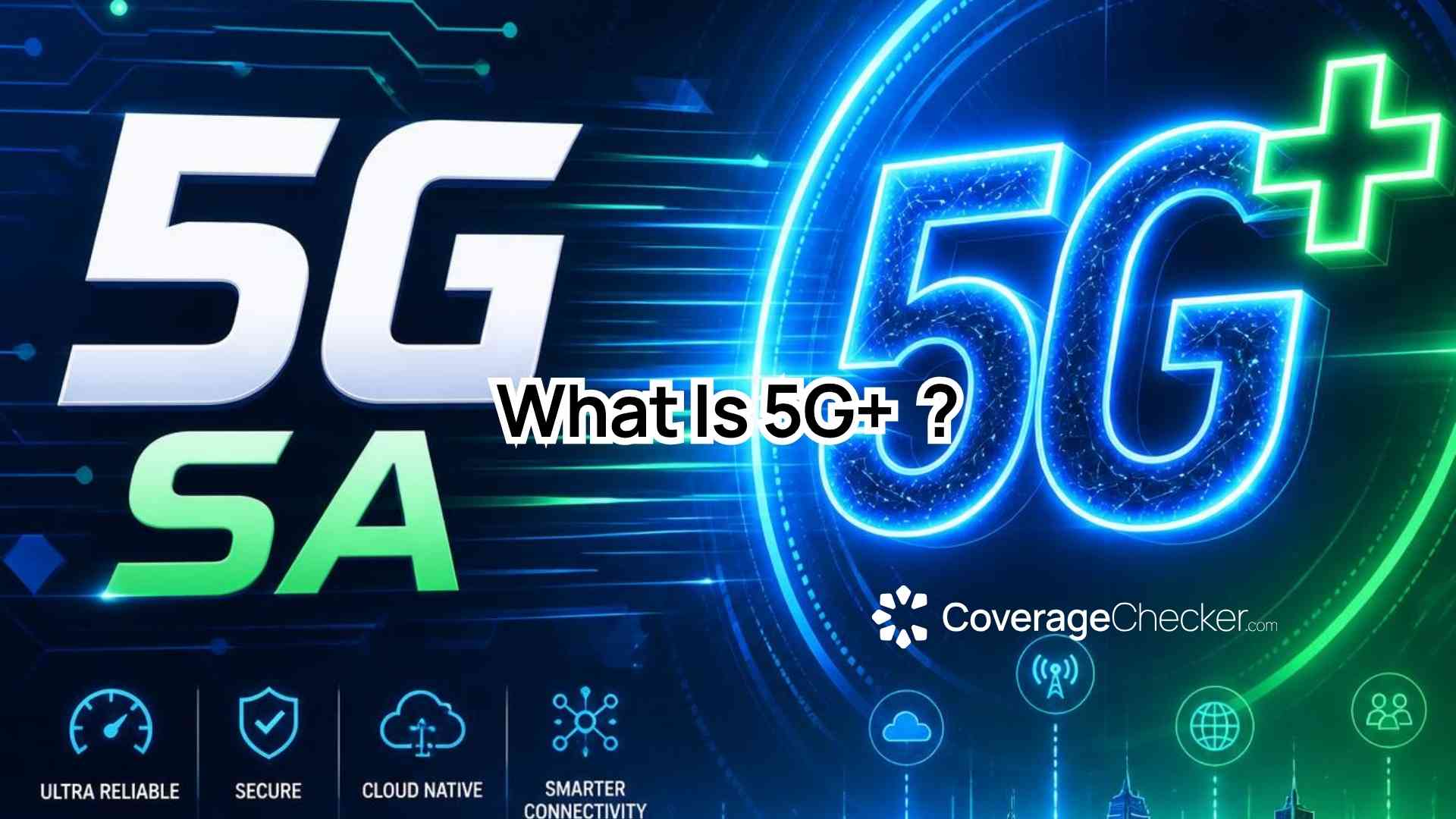
5G+ is EE's name for 5G Standalone, a more advanced version of 5G that runs on an all-5G network core instead of leaning on older 4G infrastructure behind the scenes. It's not a separate signal or a new generation of mobile network, it's the same 5G you already know, built on newer foundations that make it faster (especially uploading), more reliable in crowded places, and quicker to respond. In the UK, “5G+” is currently EE's term specifically; other networks don't use that label, even where they offer something similar.
5G+ vs Regular 5G: What's Actually Different
Most 5G in the UK today is what's called 5G Non-Standalone (5G NSA). It uses genuine 5G radio signals for the connection to your phone, but behind the scenes, the core network handling things like authentication, call routing and traffic management is still largely 4G. It works well, but it's a hybrid, not a ground-up 5G system.
5G Standalone (5G SA), what EE brands as 5G+, replaces that 4G core with a 5G-native one. Nothing about how you use your phone changes, but the underlying plumbing does, and that unlocks a few real, practical improvements:
Faster speeds, particularly for uploads, which NSA 5G doesn't improve much on
Lower latency, meaning less lag in things like video calls and online gaming
Better performance in crowded places, like stadiums or city centres at rush hour, where NSA networks can slow down
Voice over 5G (VoNR), letting calls run natively over 5G rather than dropping back to 4G
Improved battery efficiency, since the network can manage your connection more intelligently
Is “5G+” the Same Thing Everywhere?
No, and this is worth knowing if you've searched this term and found results that don't seem to match what you're seeing on an EE bill or app. In the US, AT&T also uses “5G+”, but for something different: their high-band mmWave 5G, which is about signal frequency and short-range speed, not about the network core. It has nothing to do with EE's 5G+ beyond sharing a name. If you're in the UK on EE, the explanation above is the one that applies to you.
Do You Actually Have 5G+?
Having a 5G phone and living somewhere with 5G coverage isn't automatically enough. EE's 5G+ has its own separate requirements:
You need | Specifically |
A compatible device | iPhone 15 or later, Samsung Galaxy S24/S25, Google Pixel 9/10, and around 40 other recent phones, tablets and hubs |
An eligible plan | An All Rounder or Full Works SIM-only plan bought after 29 August 2024, or a pay monthly handset plan bought after 19 March 2025 |
A recent SIM or eSIM | A physical SIM activated after September 2021, or any eSIM |
5G+ coverage where you are | Check with EE's postcode tool, coverage reached 77% of the UK population by mid-2026 and is targeted at 99% by spring 2030 |
You can check your postcode directly with EE's 5G+ coverage tool, or run a broader coverage check on CoverageChecker to see how EE's network performs at your address more generally.
Does 5G+ Cost Extra?
Not as a separate add-on. It's included on eligible plans rather than sold as a premium extra, but since only specific plans and contract dates qualify, someone on an older or lower-tier EE plan may not have access even with a fully compatible phone. If you're not sure which plan you're on, it's worth checking with EE directly rather than assuming.
Should You Actually Care?
For most everyday use, standard 5G already feels fast enough, and the difference won't be obvious scrolling social media or streaming music. Where 5G+ genuinely shows up is in the situations regular 5G struggles with: uploading large files or video, joining a packed WiFi-starved venue, competitive online gaming, or using 5G calling instead of dropping to 4G mid-call. If none of that describes how you use your phone, it's a nice-to-have rather than something to switch networks over. If it does, and you're already an EE customer with a compatible device, it's worth checking you meet the plan and SIM requirements above, since you may already have access without realising it.
Want 5G+ But Not EE?
That’s simple, just look for providers like VodafoneThree that have 5G SA (Standalone) .
5G Standalone is the industry terminology for 5G connectivity and networking which operates at full 5G capability from the mast infrastructure through to the core network that feeds into the mobile operators’ network. This is the most advanced 5G currently being deployed around the world.
If you are currently using a network that provides 5G SA, tell us about your experience. We are interested to see how many of you actually get 5G SA travelling around the UK. Comment below.