








Table of contents
ShowLondon Underground Finally Connected
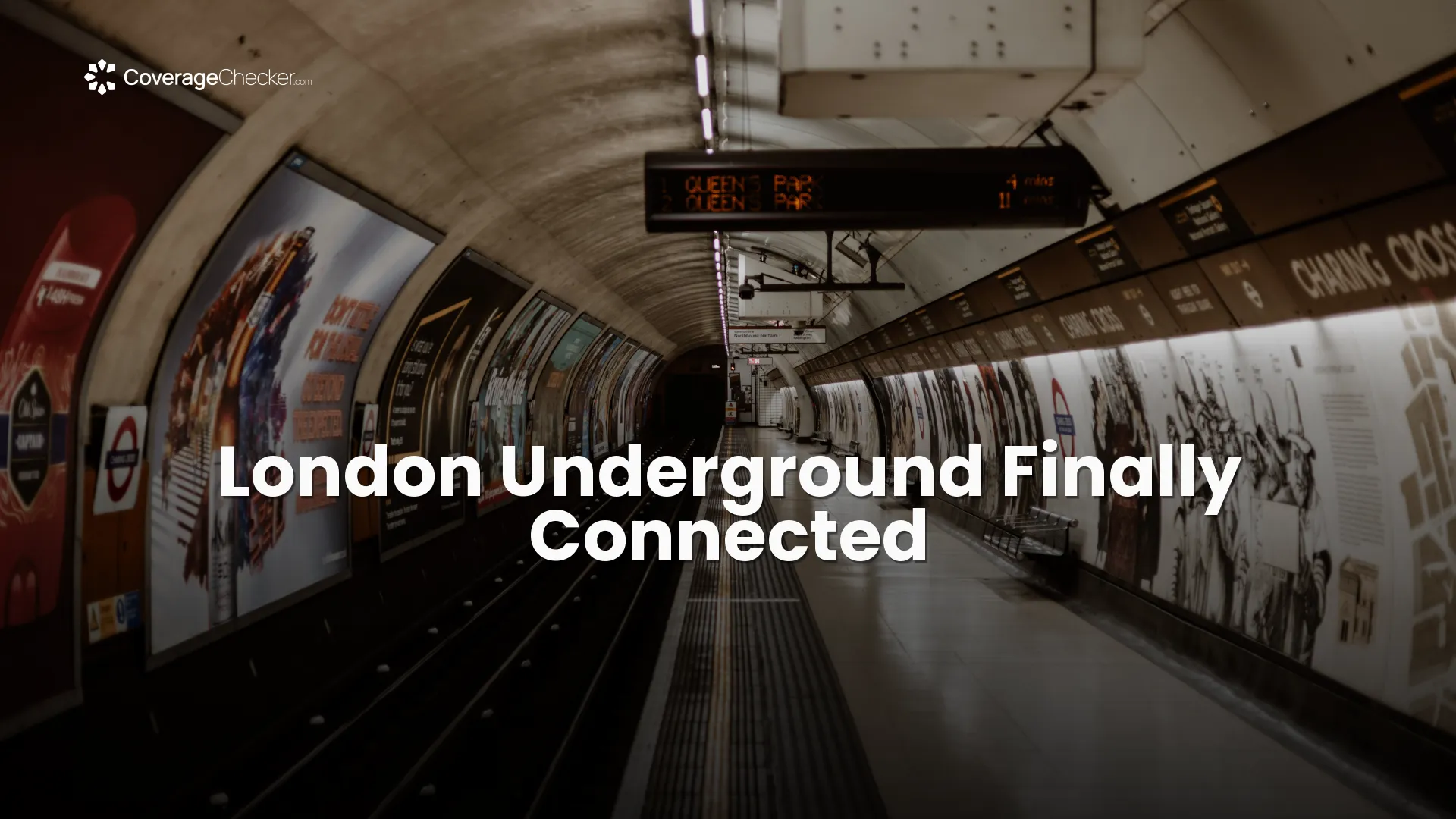
New analysis from Ookla suggests the London Underground has moved on considerably from its long reputation as a mobile dead zone. According to the data, coverage now extends across the parts of the network that have been upgraded, with usable signal detected as far as 30 metres underground and roughly one in five connections already running on 5G.
The findings point to a network that has quietly caught up with commuter expectations, following years of patchy tunnel signal and reliance on station wifi. For anyone relying on the Tube daily, this kind of progress would be a welcome shift away from the old routine of losing calls the moment a train left the platform, and it fits into the wider push covered in London Underground mobile coverage expansion Efforts.
Even so, it is worth remembering the coverage described only applies to the "connected parts" of the network, so plenty of tunnels may still be waiting their turn, and real-world experience is likely to remain patchier than the headline stats imply until the rollout is genuinely complete.
What this means for your daily commute
If you're on an MVNO (a mobile virtual network operator, one that runs its own SIM plans over one of the big four networks' infrastructure rather than owning masts itself), the improvement should filter through automatically once your host network is upgraded. It is still worth checking your own provider's underground coverage rather than assuming it matches the headline figures, since rollout has not reached every line or every tunnel at the same pace. You can check how your own provider stacks up using tools like the Smarty mobile coverage checker Or the Voxi mobile coverage checker, both of which draw on the same underlying network data that feeds into reports like this one.
Why 5G underground actually matters
Around a fifth of connections running on 5G below ground is a meaningful detail, not just a nice-to-have statistic. Tunnels are a genuinely hostile environment for radio signal, with curved concrete, depth, and constant train movement all working against a stable connection. Getting 5G to function reliably in that setting suggests the equipment installed is doing more than just patching in bare minimum 4G coverage, it points to infrastructure built with some headroom for the future, including faster data speeds for things like streaming or video calls once you are moving between stations.
Managing expectations for the rest of the network
The gap between "connected parts" and the full network is the detail worth holding onto here. London's Tube system is a patchwork of lines, depths, and construction eras, and upgrading it all is a slow, station-by-station job rather than a single switch being flipped. Passengers on lines or sections still awaiting upgrades will likely keep experiencing the familiar pattern of signal dropping the moment the train enters a tunnel, so it is sensible to treat national coverage maps and checker tools as a guide rather than a guarantee when it comes to specific stretches underground.
A step in the right direction
None of this changes the fact that the direction of travel is a genuinely positive one. A network that was once a byword for dead zones is now delivering usable signal, and in some cases fast mobile data, well below street level. For commuters who have spent years switching to airplane mode out of habit the moment they hit the barriers, that is a real quality of life improvement, even if it is not yet complete across every line.
Have you noticed a difference on your own commute lately? Whether you are getting bars of signal on a line that used to be a total blackout, or still losing calls the second the doors close, we would love to hear about your experience in the comments below.